Kathryn
Mariners' Museum, Uncurated Search Results
Type: Skipjack
Year: 1901
Builder:
Location: Crisfield
These records are found in the online catalog of The Mariners’ Museum and Park in Newport News, Virginia. Uncurated search results are presented to give researchers and interested readers an idea of whether the museum’s archives contain information about this vessel and whether it may be worthwhile to visit the museum’s catalog search page for further investigation. Uncurated results may be inaccurate or incomplete.
Search mode: Exact Name. Search phrase(s): "Kathryn". Results returned: 48. Results displayed in this table: 48.
Use these buttons to send uncurated search results to your own app or text document for further research. First, check the box for any row, or click "Select All" then uncheck any rows. Then click "Show Selections". You can then copy your selections from the text box and past them into your app.
| Fetch? | Row ID | Media | Date | Vessel | Place | Related Places | Inscription/Marks | Subject | Notes | Archive Number |
|---|---|---|---|---|---|---|---|---|---|---|
| 1 | No image URL. | Skipjacks. | The skipjack Kathryn. | LB70563 | ||||||
| 2 | No image URL. | Kathryn | P0001.011/01-1761 | |||||||
| 3 | No image URL. | Kathryn and Elma | P0001.011/01-1762 | |||||||
| 4 | No image URL. | Sailing ships.; Navigation.; Seafaring life. | Tall ships __ __text by Kathryn Lasky ; photos. by Christopher G. Knight | LB23675 | ||||||
| 5 | No image URL. | Writing, Italic; Copybooks–Bibliography.; Copybooks–Facsimiles.; Penmanship–History–16th century; Calligraphy.; Bibliography–Early printed books–16th century | Masters of the italic letter : __twenty-two exemplars from the sixteenth century __by Kathryn A. Atkins ; with a foreword by James M. Wells | LB25058 | ||||||
| 6 | 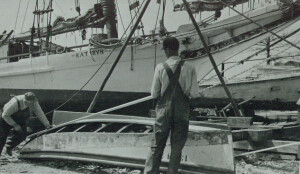 | USA; VIRGINIA; HAMPTON | Written on verso: planking the bottom, to be used as a yawl boat. Skipjack "Kathryn" in background at Harryhogan, VA. Kathryn skipjack built 1901 at Crisfield, MD. Owned by J E Spriggs | Photo shows two men planking the bottom of a small row boat, on its back in a boat yard. "Kathryn" and an unidentified boat are in the background. | P0001.009/01-#PI0352 | |||||
| 7 | 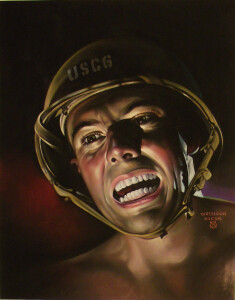 | NOTES: John Wheeldon's career began as a combat artist during the Second World War and eventually led to Hollywood, where he was employed by MGM and RKO as a staff artist and art director. He did portraits for the TV show, Queen for a Day and was art director at Los Angeles television station, KHJ. Some of the biggest names in entertainment, including Clark Gable, Kathryn Hepburn and Kirk Douglas, commissioned him to paint their portraits. Wheeldon was given a lifetime contract to paint the official portrait of the winner of each year's Academy Award for best actor and best actress. John Wheeldon died in 1993, at the age of eighty. | CL6262 | |||||||
| 8 | No image URL. | gift | LB85948 | |||||||
| 9 | 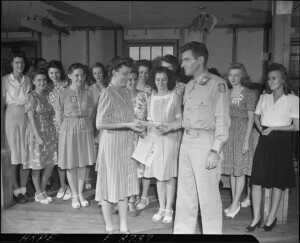 | 7/17/1944 | Port of Embarkation, Hampton Roads, Va. (U.S.). | E8737 - Capt. Wheaton, Water Div., is shown presenting suggestion award to Mrs. Kathryn G. Winnie, Water Div. 7-17-44 Official Photograph, U. S. Army Signal Corps, HRPE, Newport News, Va. | Military ceremonies, honors, and salutes–Virginia–Newport News. | Capt. Wheaton hands a woman in a striped dress a certificate. They stand in a room at the front of a crowd of women in civilian clothes. | P0003/01-#E-8737 | |||
| 10 | 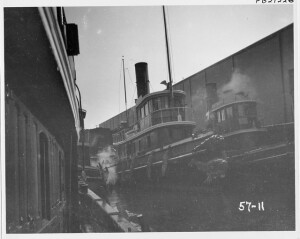 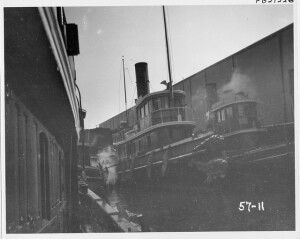 | 1911/08/15 | WRITTEN ON VERSO: BUILT 1894 AT PHILADELPHIA BY NENFIE & LEVY.OWNED BY PATRICK F. MARTIN AND OTHERS. 72T, 72 X 17 X 81. IN SERVICE 1963. KATHRYN FORMERLY IVANHOE. BUILT 1875 AT PHILADELPHIA\. OWNED BY 66.9 X 15.4 X 6.4. RENAMED BERING | Tugboats | Close up starboard bow quarter view of vessels docked. Bow view of vessel alongside BALTIC (TUGBOAT) Also in the image is the Kathryn. The Kathryn's alternate names are: Bering and Ivanhoe. | MS0224/01-#PB21226 | ||||
| 11 | No image URL. | Okeechobee, Lake (Fla.) | American lakes series. | Lake Okeechobee : __wellspring of the Everglades __[by] Alfred Jackson Hanna and Kathryn Abbey Hanna | LB11056 | |||||
| 12 | 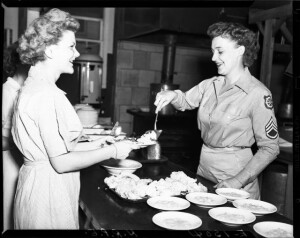 | 8/4/1945 | United States. Army. Women's Army Corps.; United States. Army–Food service. | S/Sgt. Kathryn Schuchert, A-504340, 1st WAC Company, Mess Sergeant, serves a portion of lettuce to Pvt. Clair Duff, A313562, 1st WAC Company. Photo taken in the WAC Mess Hall, HRPE, Newport News, Va. | Shows a WAC using a spatula to serve salad to another woman who is holding out her plate. | P0003/01-#E-15041 | ||||
| 13 | No image URL. | Annie's captain | LB12636 | |||||||
| 14 | No image URL. | Shipping–Deregulation–United States. | Ocean shipping reform bill taking shape. | LB57166 | ||||||
| 15 | No image URL. | Atlantic circle. | LB93958 | |||||||
| 16 | 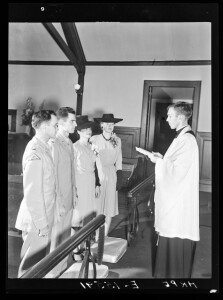 | 9/15/1945 | United States. Army–Officers. | Wedding of 2nd Lt. Harry O. Stewart and Miss Kathryn S. Hobday at the St. Andrews Episcopal Church, Hilton Village, Va. Ceremony was performed by Rev. Paul H. Kratyiz. Left to right: 1st Lt. T.D. Stewart O-1550273, Brea, Calif; Groom, 2nd Lt. Harry O. Stewart, O-19500552, Brea, Calif; Bride, Kathryn S. Hobday, York, Pa.; Brides Maid, Martha Bordeaux, Fayetteville, N.C., and Rev. Paul H. Kratzig, Rector of St. Andrews Episcopal Church, Hilton Village, Newport News, Va. | Episcopal Church–Clergy.; Military weddings–Virginia–Newport News.; Army spouses–Virginia–Newport News. | Shows the wedding party standing before their minister at the altar. The minister is looking down at a book as if he were giving them a reading. | P0003/01-#E-15591 | |||
| 17 | 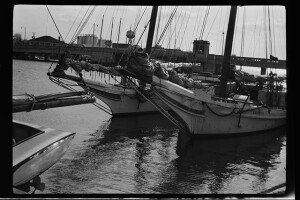 | 1950 | Stanley Norman (Sloop : 1902).; Kathryn (Sloop :1901). | Envelope: "Sallie Bramble. Bow and stern. 1950" | Sloops–United States. | Shows a port side view of the bow of two sloops moored side by side in a harbor. Some of the harbor facilities are visible in the background. There is a stern partially visible in the foreground, perhaps this is the Sallie L. Bramble. There is no caption for this negative. | MS0063/01-729#0729-B | |||
| 18 | No image URL. | Plastic scrap–Environmental aspects; Waste disposal in the ocean–Environmental aspects; Marine pollution. | A citizens guide to plastics in the ocean : __more than a litter problem __written, compiled and edited by Kathryn J. O'Hara, Suzanne Iudicello, and Rose Bierce ; foreword by Ted Danson ; artwork by Jill Perry Townsend and Susie Gwen Criswell | LB67 | ||||||
| 19 | No image URL. | North Carolina National Estuarine Research Reserve–Guidebooks | Estuaries–North Carolina. | A field guide to exploring the North Carolina National Estuarine Research Reserve __ __by John Taggart and Kathryn Henderson ; design and illustration by Jeannette Holmes | LB94 | |||||
| 20 | 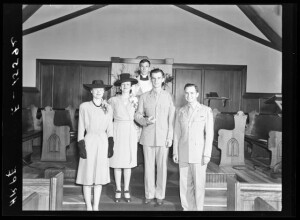 | 9/15/1945 | United States. Army–Officers. | Wedding party is shown after ceremony which was performed in the St. Andrews Episcopal Church, Hilton Village, Newport News, Va. They are, left to right: Brides Maid, Martha Bordeaux, Fayetteville, N.C.; Bride, Kathryn S. Hobday, York, Pa.; Groom, 2nd Lt. Harry O. Stewart, O-1950052, Brea, Calif..; and Best Man, 1st Lt. T.D. Stewart, O-1550273, Brea, Calif. In the background is the Rev. Paul H. Kratzig, Rector of St. Andrews, who performed the ceremony. | Episcopal Church–Clergy.; Military weddings–Virginia–Newport News.; Army spouses–Virginia–Newport News. | Group portrait of the wedding party, the bride and groom are holding hands. Their minister is in the center and above them as he is standing on the altar. | P0003/01-#E-15592 | |||
| 21 | No image URL. | Shanghai (China)–Commerce. | Harbors–China–Shanghai.; Shipping–China–Shanghai. | Splitting apart: __the Shanghai treaty port in transition, 1914-1921 __Kathryn Meyer | LB32610 | |||||
| 22 | No image URL. | Greece–History, Naval. | Battering rams–Greece.; Warships–History–Greece | The development of the ram in Greek naval history __ __Kathryn A. O. Simonsen | LB86414 | |||||
| 23 | 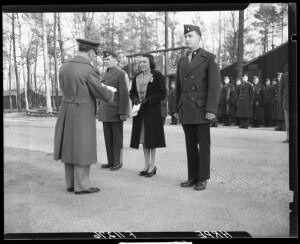 | 12/15/1944 | F-11276 - Ideas for victory awards are presented to two officers and one civilian employee of CPH by Lt. Col. Herbert A. Jones, 0-138893, Brooklyn, N.Y., Executive Officer. Receiving the awards are, left to right: Capt. Sydney (NMI) Schreiber, 0-1638456, Philadelphia, Pa., Signal Officer; Mrs. Kathryn M. Miller, Newport News, Va., Civilian Personnel Branch, and 1st Lt. Thaddeus H. Laskowski, 0-1894493, Hartford, Conn., Camp Inspector. Photo taken at CPH. 12-15-44 | Award presentations.; Awards–Virginia–Newport News.; Military ceremonies, honors, and salutes–Virginia–Newport News. | Two officers and one civilian being presented with Ideas for Victory awards. | P0003/01-#F-11276 | ||||
| 24 | No image URL. | Geology–Virginia–Tidewater Region | "Field trip guidebook for the 11th Annual Shelf and Shore Workshop, April 13-14, 1984." | LB33654 | ||||||
| 25 | 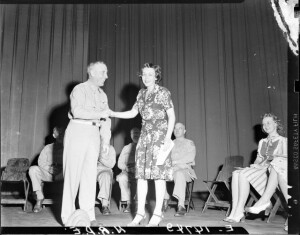 | 7/12/1945 | United States. Army–Officers. | Colonel John R. Fountain, O-7927, Commanding Officer, CPH, presents Mrs. Kathryn Miller, Williamsburg, Va., with a check for $250 in behalf of the Suggestions and Awards Committee at the civilian Orientation hour. Mrs. Miller sent in the Prize-winning slogan for the Transportation Corps, "You and your job help turn this wheel". Mrs. Miller has two sons and a daughter and works in the Control Division, CPH. Photo taken at CPH. | Incentive awards–Virginia–Newport News.; Civilians in war–Virginia–Newport News. | Shows an officer and a civilian woman shaking hands on stage. They are both smiling. In the background four other individuals can be partially seen. | P0003/01-#E-14749 | |||
| 26 | 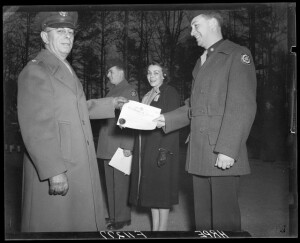 | 12/15/1944 | F-11277 - Lt. Col. Herbert A. Jones, 0-138893, Brooklyn, N.Y., CPH Executive Officer, is shown presenting ideas for victory awards to 1st Lt. Thaddeus H. Laskowski, 0-1894493, Hartford, Conn., Camp Inspector. Certificates also were presented to Capt. Sydney (NMI) Schreiber, 0-163845, Philadelphia, Pa., Camp Signal Officer, and Mrs. Kathryn M. Miller, Newport News, Va., Civilian Personnel Branch. Photo taken at CPH. 12-15-44 | Award presentations.; Awards–Virginia–Newport News.; Military ceremonies, honors, and salutes–Virginia–Newport News. | Lt. Col. Herbert Jones handing an Ideas for Victory award to 1st Lt. Thaddeus Laskowski. Another officer and a civilian are standing next to them. | P0003/01-#F-11277 | ||||
| 27 | 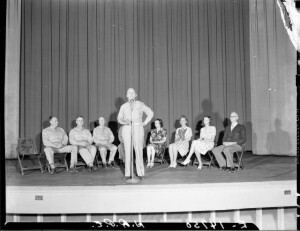 | 7/12/1945 | United States. Army–Officers. | Colonel John B. Fountain, O-7927, Commanding Officer, Camp Patrick Henry, addresses the Civilian Orientation Hour at Theater #3, prior to presentation of cash awards to four civilian employees in behalf of the Suggestion and Awards Committee, Civilians, are, left to right: Mrs. Kathryn Miller, Control Division, winning $250 for prize-winning slogan for the Transportation Corps, "You and your job help make this wheel turn", Mrs. Edith Jones, Control Division, winning $5.00 for a suggestion concerning revision of inter-camp bus schedule. Mrs. William J. Beaman, Adjutant's Office for suggestion concerning color scheme in Camp Headquarters, and Mr. Quinn Plant, Civilian Branch, for inter-camp bus suggestion. Photo taken at CPH. | Incentive awards–Virginia–Newport News.; Civilians in war–Virginia–Newport News. | Shows Col. Fountain speaking at a microphone on a stage. Behind him are four civilians and three unnamed officers, all seated. | P0003/01-#E-14750 | |||
| 28 | 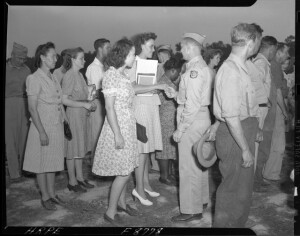 | 7/17/1944 | United States. Army. Camp Patrick Henry (Va.). Yoder Field. | E8778 - Capt. Moos, 01000426, A.G.D. Director of Personnel, extends congratulations to Miss Kathryn Brown, 1039 Hornet Circle, Ferguson Park, Newport News, Va. Miss Brown is head mess attendant at aptiends mess #1, Station Hospital, Camp Patrick henry. 7-17-44 Official Photograph, U. S. Army Signal Corps, HRPE, Newport News, Va. | Award presentations.; Military ceremonies, honors and salutes–Virginia–Newport News. | Capt. Moos shakes hands with a young woman in a civilian summer dress who holds a large box of Hershey's chocolate bars. She is in a line of other civilians in a parade field. | P0003/01-#F-8778 | |||
| 29 | No image URL. | United States. Coast Guard. | Shipwrecks–History–20th century. Virginia–Atlantic Coast; Lifesaving–History–20th century. Virginia–Atlantic Coast | Photocopy of typescript. "All information gathered came from the U.S. treasury annual reports of the Coast Guard: 1915-1931, unless noted otherwise, except for the summary of telegrams from 1921 to 1941, which came from the National Archives." | LB37961 | |||||
| 30 | No image URL. | South Carolina–Commerce–Great Britain; Great Britain–Commerce–South Carolina | Indians of the Southeast | Creek Indians–Commerce; Creek Indians–Economic conditions; Creek Indians–History–18th century | Deerskins & duffels : __the Creek Indian trade with Anglo-America, 1685-1815 __Kathryn E. Holland Braund | LB9965 | ||||
| 31 | 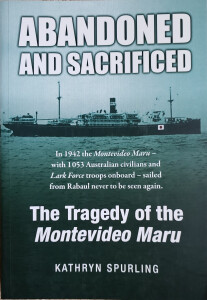 | Montevideo Maru (Miscellaneous auxiliary : 1941).; Montevideo Maru (Motor vessel : 1926). | World War, 1939-1945–Campaigns–Papua New Guinea–Rabaul.; World War, 1939-1945–Prisoners and prisons, Japanese.; Prisoners of war–Australia.; World War, 1939-1945–Atrocities–Papua New Guinea–Rabaul.; World War, 1939-1945–Philippines. | Abandoned and sacrificed : __the tragedy of the Montevideo Maru __Kathryn Spurling | LB107203 | |||||
| 32 | 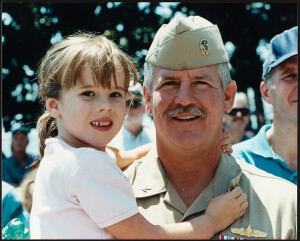  | 8/10/2002 | Monitor (Ironclad : 1862).; Mariners' Museum (Newport News, Va.).; United States. Navy–Officers–Photographs. | Newport News (Va.). | NORTHROP GRUMMAN NEWPORT NEWS, 4101 WASHINGTON AVE. NEWPORT NEWS, VA. 23607, PHOTO REQUEST NO C02-208-48 DATE: 08/10/2002 USS MONITOR. TURRET ARRIVAL CEREMONY AT THE MARINER'S MUSEUM CHARGE NO.: X511-271X-2 STAFF PHOTOGRAPHER/S JOHN WHALEN | Turrets–Photographs.; Parades–Virginia–Newport News. | Color photograph of Capt. Chris Murray holding his daughter Kathryn. Restricted access. Kept in remote cold storage; access requires 48 hours advance notice. Patrons are requested to use a vintage duplicate print located in Box 2, available in the Library. | MS0336/001.03-01.28#08 | ||
| 33 | 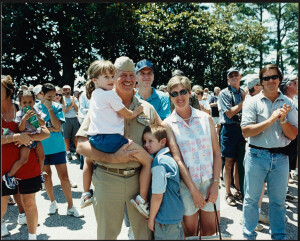  | 8/10/2002 | Monitor (Ironclad : 1862).; Mariners' Museum (Newport News, Va.).; United States. Navy–Officers–Photographs. | Newport News (Va.). | NORTHROP GRUMMAN NEWPORT NEWS, 4101 WASHINGTON AVE. NEWPORT NEWS, VA. 23607, PHOTO REQUEST NO C02-208-32 DATE: 08/10/2002 USS MONITOR. TURRET ARRIVAL CEREMONY AT THE MARINER'S MUSEUM CHARGE NO.: X511-271X-2 STAFF PHOTOGRAPHER/S JOHN WHALEN | Portraits, Group.; Parades–Virginia–Newport News. | Color photograph of Capt. Chris Murray standing with his wife Nancy, daughter Kathryn and son Dan amongst the crowd that has gathered to view the arrival of the recovered Monitor turret. Restricted access. Kept in remote cold storage; access requires 48 hours advance notice. Patrons are requested to use a vintage duplicate print located in Box 2, available in the Library. | MS0336/001.03-01.27#02 | ||
| 34 | 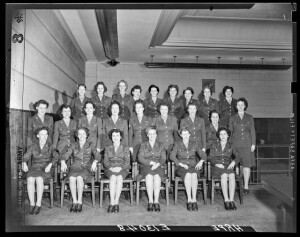 | 3/21/1945 | United States. Army. Women's Army Corps. | First WAC Non-Commissioned Officers Conference held at HRPE. The conference was for all the non-commissioned officers of the four WAC installations assigned to cadre. Photo taken at HRPE, Newport News, Va., for Historical purposes. | Shows a group portrait of WAC non-coms. The first row is seated, second row is standing, and the third row stands on a riser. | P0003/01-#E-13048 | ||||
| 35 | 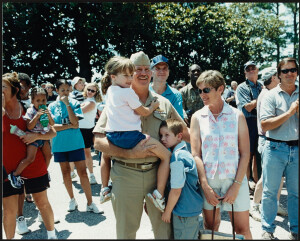  | 8/10/2002 | United States. Navy–Officers–Photographs.; Monitor (Ironclad : 1862).; Mariners' Museum (Newport News, Va.). | Newport News (Va.). | NORTHROP GRUMMAN NEWPORT NEWS, 4101 WASHINGTON AVE. NEWPORT NEWS, VA. 23607, PHOTO REQUEST NO C02-208-31 DATE: 08/10/2002 USS MONITOR. TURRET ARRIVAL CEREMONY AT THE MARINER'S MUSEUM CHARGE NO.: X511-271X-2 STAFF PHOTOGRAPHER/S JOHN WHALEN | Portraits, Group.; Parades–Virginia–Newport News. | Color photograph of Capt. Chris Murray standing with his wife Nancy, daughter Kathryn and son Dan amongst the crowd that has gathered to view the arrival of the recovered Monitor turret. | MS0336/002.03-02.22#01 | ||
| 36 | 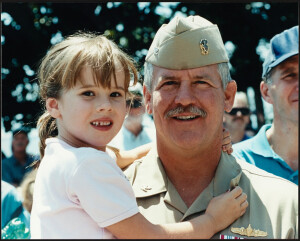  | 8/10/2002 | Monitor (Ironclad : 1862).; Mariners' Museum (Newport News, Va.).; United States. Navy–Officers–Photographs. | Newport News (Va.). | NORTHROP GRUMMAN NEWPORT NEWS, 4101 WASHINGTON AVE. NEWPORT NEWS, VA. 23607, PHOTO REQUEST NO C02-208-48 DATE: 08/10/2002 USS MONITOR. TURRET ARRIVAL CEREMONY AT THE MARINER'S MUSEUM CHARGE NO.: X511-271X-2 STAFF PHOTOGRAPHER/S JOHN WHALEN | Turrets–Photographs.; Parades–Virginia–Newport News. | Color photograph of Capt. Chris Murray holding his daughter Kathryn. | MS0336/002.03-02.23#08 | ||
| 37 | 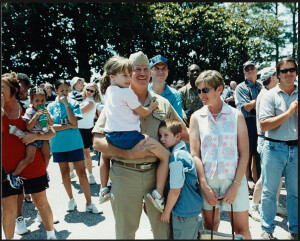  | 8/10/2002 | United States. Navy–Officers–Photographs.; Monitor (Ironclad : 1862).; Mariners' Museum (Newport News, Va.). | Newport News (Va.). | NORTHROP GRUMMAN NEWPORT NEWS, 4101 WASHINGTON AVE. NEWPORT NEWS, VA. 23607, PHOTO REQUEST NO C02-208-31 DATE: 08/10/2002 USS MONITOR. TURRET ARRIVAL CEREMONY AT THE MARINER'S MUSEUM CHARGE NO.: X511-271X-2 STAFF PHOTOGRAPHER/S JOHN WHALEN | Portraits, Group.; Parades–Virginia–Newport News. | Color photograph of Capt. Chris Murray standing with his wife Nancy, daughter Kathryn and son Dan amongst the crowd that has gathered to view the arrival of the recovered Monitor turret. Restricted access. Kept in remote cold storage; access requires 48 hours advance notice. Patrons are requested to use a vintage duplicate print located in Box 2, available in the Library. | MS0336/001.03-01.27#01 | ||
| 38 | 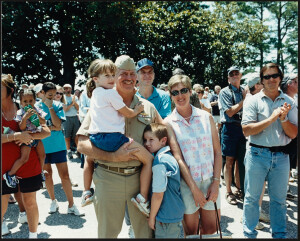  | 8/10/2002 | Monitor (Ironclad : 1862).; Mariners' Museum (Newport News, Va.).; United States. Navy–Officers–Photographs. | Newport News (Va.). | NORTHROP GRUMMAN NEWPORT NEWS, 4101 WASHINGTON AVE. NEWPORT NEWS, VA. 23607, PHOTO REQUEST NO C02-208-32 DATE: 08/10/2002 USS MONITOR. TURRET ARRIVAL CEREMONY AT THE MARINER'S MUSEUM CHARGE NO.: X511-271X-2 STAFF PHOTOGRAPHER/S JOHN WHALEN | Portraits, Group.; Parades–Virginia–Newport News. | Color photograph of Capt. Chris Murray standing with his wife Nancy, daughter Kathryn and son Dan amongst the crowd that has gathered to view the arrival of the recovered Monitor turret. | MS0336/002.03-02.22#02 | ||
| 39 | 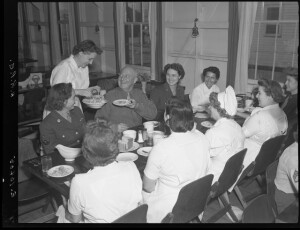 | 10/18/1944 | United States. Army. Women's Army Corps.; Port of Embarkation, Hampton Roads, Va. (U.S.). WAC Mess Hall. | E-10405 - T/4 Kathering Schuchert, Cook, is shown offering more salad to Brig. Gen. Kilpatrick, Commanding General, HRPE, Newport News, Va. 10-18-44 Official Photograph, U. S. Army Signal Corps, HRPE, Newport News, Va. | Luncheons–Virginia–Newport News. | Several women are seated at a long table, about half in WAC uniforms and half in uniforms for the food services. Gen. Kilpatrick sits at the center of one side, speaking with the women. | P0003/01-#E-10405 | |||
| 40 | 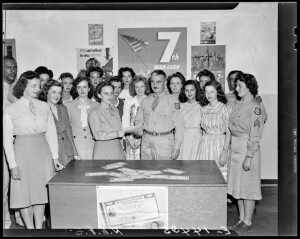 | 6/25/1945 | United States. Army–Officers.; United States. Army. Women's Army Corps. | Col. Emmett G., Lenihan, 0472435, Seattle, Washington, Base Commandant, is shown congratulating Lt. Elizabeth W. Bianchi, L-201120, Brooklyn, N.Y., Base WAC bond officer at NAB, for the fine job that she and her committee did in achieving their goal. Left to right: front row, T/5 Helen C. Berkemer, 504612, Columbus, Ohio; Miss Wanda Dodgion, 2300 Vinvient Ave., Norfolk, Va.; Mrs. Wanda Williamson, 890 Batetourt St., Norfolk, Va.; Miss Lillian Hodges, 7218 Ralph St., Norfolk, Va.; Miss Florence Kelly, 1037 Ingleside Rd., Broad Creek, Norfolk, Va.; Mrs. June Blair, 104 D Suburban Parkway, Norfolk, Va., Miss Kathryn Wright, 1427 West 50 St., Norfolk, Va.; Sgt. Amy C. Bastiani, 609435, Milwaukee, Wisc. Rear row, left to right: Sgt. George M. Bells, 34327570, Columbia, Tenn.; Miss Beverly Brenner, 1040 Brandon Ave., Norfolk, Va.; Miss Vera D.B. Miller, 1019 Jamestown Crescent, Norfolk, Va.; Miss Mary Lou Hensley, 3709 Sewells Pt. Rd., Norfolk, Va.; Pfc Sidney (Minute) Mann, 32640650, Bronx, N.Y.; THese were the Minute men for the 7th War Load Drive who succeeded in putting their section over their quotas more than 3 weeks before the drive ended and thus helping put the Norfolk Army Base as a whole, over its quota. | Fund raising–Virginia–Norfolk.; War posters, American–Virginia–Norfolk. | Shows eighteen individuals, mostly civilian women, gathered around a table covered with war bonds. The wall behind them is decorated with war posters. | P0003/01-#E-14495 | |||
| 41 | 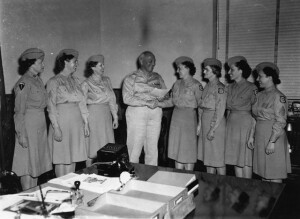 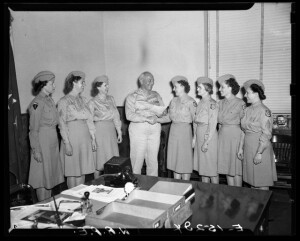 | 8/13/1945 | United States. Army–Officers.; United States. Army. Women's Army Corps. | Food Conservation award won by 1st WAC Company for the second time. They are congratulated by Brig. Gen. John R. Kilpatrick, O-167001, New York City, N.Y., Commanding General of HRPE. Left to right: Capt. Lena B. Twaddell of Arcola, Mo., L701191; Commanding Officer, 1st WAC Company; T/4 Bernice Reppert, A304979, Hamburg, Pa.; T/5 Gwendolyn Abernathy, A-804489, Sherman, Texas; General Kilpatrick; S/Sgt. Katheryn Schuchert, A504340, Toledo, Ohio; Pfc. Mary E. Harms, A315551, Norfolk, Va.; Pvt. Rheba Kitts, A320858, Liggett, Ky.; and T/4 Kay Gross, A505063, Youngstown, Ohio. Photo taken in the General's Office, Post Office Building, HRPE, Newport News, Va. | Food conservation–Virginia–Newport News.; Incentive awards–Virginia–Newport News. | Shows Brig. Gen. Kilpatrick with seven WACs in his office, he is shaking hands with a company officer. | P0003/01-#E-15294 | |||
| 42 | No image URL. | Great Britain–Colonies–History–18th century | Pirates–History–18th century; Privateering–History–18th century.; Punishment–History–18th century–Great Britain | Capital criminals __ __by Kathryn Duncan | LB39732 | |||||
| 43 | 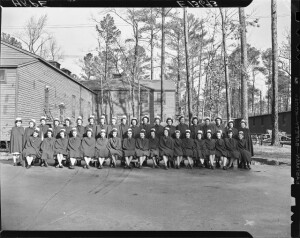 | 4/19/1945 | United States. Army Nurse Corps–Nurses.; United States. Army–Officers–Portraits.; United States. Army–Medical personnel. | Photo graph of Army Nurse Corps, Station Hospital, Camp Patrick Henry, Va. (Refer to caption sheet for list of names.) | Group photo of 38 nurses, they are shown wearing capes. There is no 8x10 print for this photo, so there is no associated caption sheet. | P0003/01-#E-13693 | ||||
| 44 | 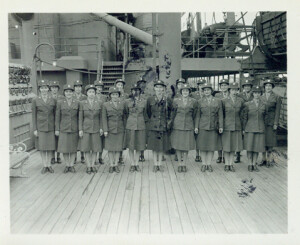 | 5/8/1943 | Nea Hellas (Turbo steamship : 1939).; United States. Army. Women's Army Auxiliary Corps. | "21 WAACs aboard the HR 190 (SS Neo Helas) sailing for service overseas HRPE Newport News, Va. 5-8-43. Official photograph USArmy Signal Corps HRPE Newport News, Va."; stamped in black "Confidential" | Portraits, Group–Virginia–Newport News. | A group portrait of 21 WAACs aboard the Nea Hellas. | P0003/01-#L-2092 | |||
| 45 | 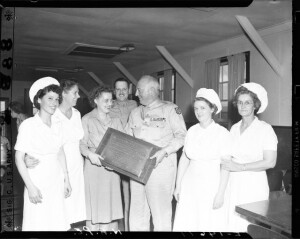 | 7/9/1945 | United States. Army–Food service.; United States. Army. Women's Army Corps.; United States. Army–Officers. | Brig. General John R. Kilpatrick, 0167001, New York City, N.Y., Commanding General of HRPE, is shown presenting the 1st WAC Company, HRPE, with the "First Award of Merit" plaque for the conservation of food. Shown receiving the award is T/4 Kathryn Schuchert, A504340, 1st WAC Company, HRPE, Toledo, Ohio. Looking on left to right: Pvt. Reba C. Kitts, A-320858, 1st WAC Co., HRPE, Liggette, Ky.; T/4 Bernice A. Reppert, A-304979, 1st WAC Company, HRPE, Hamburg, Pa.; T/4 Schuchert; Capt. Arthur M. Fransen, 04430352, Food Sv. Super. & Conservation Officer, HRPE, Chicago, Ill.; General Kilpatrick; T/5 Ethyl A. Bruni, A-5514189, 1st WAC Co., HRPE, Hammond, Ind.; and Pfc. Mary E. Harms, A-315551, 1st WAC Co., HRPE, Portsmouth, Va. Photo taken in the WAC MEss Hall, HRPE, Newport News, Va., for publicity purposes. | Plaques, plaquettes–Virginia–Newport News. | Shows Brig. Gen. Kilpatrick presenting a plaque to five women dressed in kitchen attire in the WAC Mess Hall. The plaque reads: First Award of Merit. | P0003/01-#E-14677 | |||
| 46 | 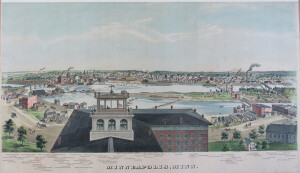 | SHORT DESCRIPTION: Colored bird's-eye view of Minneapolis. Published by Alfred T. Andreas in the special edition of his 1874 Illustrated Historical Atlas of the State of Minnesota. The city is seen from the west looking over the roof and observation tower of McCallester College and over the Mississippi river towards the city. There are eighty-five buildings identified under the image, including churches, mills, factories, municipal buildings, and hotels. The original span of the Hennepin Avenue bridge, believed to have been the first permanent span across the Mississippi at any point, can be seen. NOTES: This is one of the earliest views of Minneapolis. The image is proceeded only by the Hageboeck view of 1873 and a view of both St. Anthony and Minneapolis in 1867 by Ruger. The view is one of the best visual documents of the composition of the city's early economy, which revolved around the hydropower of St. Anthony Falls. "Ellsbury did not use the bird's-eye view perspective so popular with his contemporaries. Instead, he portrayed his cities as seen from the ground or from a slight elevation and some distance. He filled the foregrounds of these long panoramas with interesting and pictorially effective details" (Reps p.174). NOTES: Text from MNOpedia.org, text by Kathryn R. Goetz: When Alfred T. Andreas chose Minnesota as the subject for his new atlas, the state was only fifteen years old. Andreas's publication of An Illustrated Historical Atlas of the State of Minnesota changed the way state atlases were written, illustrated, and distributed. The atlas also put the social and cultural landscape of early Minnesota literally on the map. Andreas was born in upstate New York in 1839 and moved to Iowa probably sometime in the 1850s. Back in Iowa after the Civil War, he was recruited to join a county mapping company. While selling maps, Andreas began to consider a new format. He believed that he could find new buyers for county maps that were separated by township and bound in book form. In 1873, Andreas set out to create an atlas that would cover the entire state of Minnesota. An Illustrated Historical Atlas of the State of Minnesota, published the following year, would be the greatest success of his career. The atlas was the first in a new genre that combined maps of an entire state with detailed information about particular locations. Andreas would go on to publish other state atlases and histories. However, none were as commercially successful as the Minnesota project. Creating a new type of atlas proved a challenge to Andreas's map publishing company. When he began the project in 1873, most of the state was still unmapped. Many areas of Minnesota were sparsely populated and travel was often difficult. From his Chicago offices Andreas directed a group of over 100 employees who traveled Minnesota to work on the atlas. As teams of mapmakers and artists created the maps and lithographs for the atlas, teams of salesmen convinced Minnesotans to subscribe. Fifteen dollars would buy a subscription and add the subscriber's name to the atlas. But Andreas's salesmen also convinced subscribers to pay for the publication of portraits and biographies. They also encouraged subscribers to include images of their homes, families, or farms. By the time the process was complete, the team had collected 12,000 subscriptions. Andreas relied on advertising more than previous map publishers did. He took out printed atlas advertisements in local newspapers. Andreas also encouraged the newspapers to print stories about the project. The newspaper articles were primarily aimed at Minnesota's wealthy farmers and boasted about the size, scope, and importance of the atlas project. The atlas was published in 1874 at a cost of more than $200,000. The production of the atlas took seventy tons of paper and seventeen tons of cardboard binding. The finished 400-page atlases included nearly 100 pages of maps and over 100 pages of illustrations. The volume also contained historical and geographical information about the state. Most important to many subscribers, the atlas contained a thirty-page list of "Patrons." A poor wheat harvest meant that only around 10,000 of 12,000 subscribers were able to pay to collect their atlases. Nevertheless, historians estimate that one in seven Minnesota households had a copy. Andreas's project was not without criticism. Some accused Andreas and his team of being swindlers. They argued that Andreas took advantage of farmers and laborers. The traveling salesmen, they claimed, convinced humble citizens to spend money they could not afford. However, what made the atlas seem like a scheme to many was a major part of its appeal. Previous atlases and maps had illustrated only major institutions and the homes of the rich. Andreas's atlas encouraged ordinary citizens to pay to have their home or farm sketched. It allowed farmers and doctors to appear alongside more illustrious Minnesotans. To some, the atlas company employees seemed no different from travelling peddlers selling cheap trinkets and patent medicines. To others, the atlas seemed to promise a more democratic view of Minnesota. In the end, the maps printed in An Illustrated Historical Atlas of the State of Minnesota were low quality. However, the atlas continues to provide researchers with a wealth of social and cultural information about early Minnesota. Its illustrations depict towns, structures, and landscapes in great detail. The atlas emphasizes not only Minnesota's geography, but its history and future potential. Alfred T. Andreas's atlas put a young state on the map and continues to serve as a rich historical record of early Minnesota. | CL20326 | |||||||
| 47 | 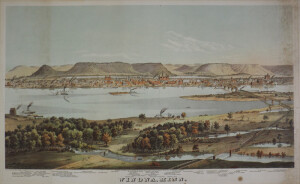 | SHORT DESCRIPTION: Bird's-eye view of Winona, Minnesota. A handsome bird's-eye view of Winona, Minnesota, in the Mississippi River Valley, issued by Alfred T. Andreas in 1874. NOTES: The view was published by George H. Ellsbury & Vernon Green, with the multi-stone lithography by Charles Shober & Co. of the Chicago Lith. Co. The view appeared in the deluxe editions of A.T. Andreas's 1875 Atlas of Minnesota, along with views of St. Paul and Minneapolis. Winona's historic downtown, with its impressive brick buildings, is easily deciphered in this beautiful view. Reps lists three other bird's-eye views of Winona from 1866 to 1889. All of these are rare. "Ellsbury did not use the bird's-eye view perspective so popular with his contemporaries. Instead, he portrayed his cities as seen from the ground or from a slight elevation and some distance. He filled the foregrounds of these long panoramas with interesting and pictorially effective details" (Reps p.174). NOTES: Text from MNOpedia.org, text by Kathryn R. Goetz: When Alfred T. Andreas chose Minnesota as the subject for his new atlas, the state was only fifteen years old. Andreas's publication of An Illustrated Historical Atlas of the State of Minnesota changed the way state atlases were written, illustrated, and distributed. The atlas also put the social and cultural landscape of early Minnesota literally on the map. Andreas was born in upstate New York in 1839 and moved to Iowa probably sometime in the 1850s. Back in Iowa after the Civil War, he was recruited to join a county mapping company. While selling maps, Andreas began to consider a new format. He believed that he could find new buyers for county maps that were separated by township and bound in book form. In 1873, Andreas set out to create an atlas that would cover the entire state of Minnesota. An Illustrated Historical Atlas of the State of Minnesota, published the following year, would be the greatest success of his career. The atlas was the first in a new genre that combined maps of an entire state with detailed information about particular locations. Andreas would go on to publish other state atlases and histories. However, none were as commercially successful as the Minnesota project. Creating a new type of atlas proved a challenge to Andreas's map publishing company. When he began the project in 1873, most of the state was still unmapped. Many areas of Minnesota were sparsely populated and travel was often difficult. From his Chicago offices Andreas directed a group of over 100 employees who traveled Minnesota to work on the atlas. As teams of mapmakers and artists created the maps and lithographs for the atlas, teams of salesmen convinced Minnesotans to subscribe. Fifteen dollars would buy a subscription and add the subscriber's name to the atlas. But Andreas's salesmen also convinced subscribers to pay for the publication of portraits and biographies. They also encouraged subscribers to include images of their homes, families, or farms. By the time the process was complete, the team had collected 12,000 subscriptions. Andreas relied on advertising more than previous map publishers did. He took out printed atlas advertisements in local newspapers. Andreas also encouraged the newspapers to print stories about the project. The newspaper articles were primarily aimed at Minnesota's wealthy farmers and boasted about the size, scope, and importance of the atlas project. The atlas was published in 1874 at a cost of more than $200,000. The production of the atlas took seventy tons of paper and seventeen tons of cardboard binding. The finished 400-page atlases included nearly 100 pages of maps and over 100 pages of illustrations. The volume also contained historical and geographical information about the state. Most important to many subscribers, the atlas contained a thirty-page list of "Patrons." A poor wheat harvest meant that only around 10,000 of 12,000 subscribers were able to pay to collect their atlases. Nevertheless, historians estimate that one in seven Minnesota households had a copy. Andreas's project was not without criticism. Some accused Andreas and his team of being swindlers. They argued that Andreas took advantage of farmers and laborers. The traveling salesmen, they claimed, convinced humble citizens to spend money they could not afford. However, what made the atlas seem like a scheme to many was a major part of its appeal. Previous atlases and maps had illustrated only major institutions and the homes of the rich. Andreas's atlas encouraged ordinary citizens to pay to have their home or farm sketched. It allowed farmers and doctors to appear alongside more illustrious Minnesotans. To some, the atlas company employees seemed no different from travelling peddlers selling cheap trinkets and patent medicines. To others, the atlas seemed to promise a more democratic view of Minnesota. In the end, the maps printed in An Illustrated Historical Atlas of the State of Minnesota were low quality. However, the atlas continues to provide researchers with a wealth of social and cultural information about early Minnesota. Its illustrations depict towns, structures, and landscapes in great detail. The atlas emphasizes not only Minnesota's geography, but its history and future potential. Alfred T. Andreas's atlas put a young state on the map and continues to serve as a rich historical record of early Minnesota. | CL27318 | |||||||
| 48 | 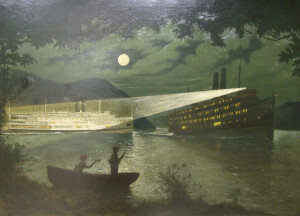   | SHORT DESCRIPTION: Oil painting by Samuel Ward Stanton showing the Citizens Line steamboats Rensselaer and Trojan of the Hudson Navigation Company. The image shows the two vessels at night with the Trojan at the right illuminating the Rensselaer at the right with its searchlight. The vessels are viewed from the forested shoreline. A canopy of leaves crosses the top of the canvas. In the foreground at the bottom is a grassy shoreline dotted with periodic bushes, mostly at the left side. A small rowboat is in the water near the shoreline carrying a man and a woman. The man is standing and appears to be holding an oar or pole. The woman is sitting and appears to be waving a handkerchief at the passing steamboats. A full moon sits in a partly cloudy sky at the top center left. Behind the boats are the steep headlands that line the Hudson River. The aspect of the scene appears to have been taken from Little Stony Point looking towards Storm King. This area is frequently referred to as the "Southern Gate of the Hudson Highlands." The painting was probably created in 1909 when the two new steamboats were first placed on the New York to Troy route. NOTES: Notes from “The Beautiful Hudson by Searchlight” issued by The People’s Evening Line Steamers of New York in 1905, discussing the use of searchlights by the Hudson Navigation Company steamboats. Reviewing the book it’s obvious the searchlight theme was part of the company’s marketing strategy before Rensselaer and Trojan were launched. All the steamboats of the line were fitted with 36-inch battleship searchlights (the largest made) on their bows so that “when darkness comes on….the great searchlight forward picks out the beautiful spots on shore or mountain and illuminates them with almost startling weirdness and brilliancy.” The text indicates the searchlights were operated continuously after dark to highlight villages, the homes of prominent officials and businessmen, famous public buildings (like Sing Sing prison and West Point Military Academy), terrestrial landmarks (like hills, mountains and waterfalls), bridges and historic sites along the route. The use of the searchlight was considered to be a highlight of night time travel on the Hudson. The brochure remarks “standing on the deck of the steamer one is constantly surprised by glimpses given by the searchlight through the trees and foliage, of bits of scenery which are picturesque in the truest sense of the word.” As vessels traveling the route met they would use their searchlights to attract the other’s attention and the boats would exchange “good-nights” as they passed. NOTES: Excerpt from “Up the Hudson and Beyond,” providing a thorough description of the steamboats Rensselaer and Trojan. The Hudson Navigation Company operated two lines, The People’s Line, operating a night time steamer service between New York and Albany (Adirondack (1896) and C. W. Morse (1904)), and the Citizen’s Line, operating a night time steamer service between New York and Troy (Trojan (1908) and Rensselaer (1909)). Hudson Navigation Company added Trojan and Rensselaer to the Citizens Line in the spring/summer of 1909. “Each boat is a steel-hulled side-wheel steamboat, having a length of 330 feet. The breadth of the hull at the main deck is 42 feet, and over the guards at 76 feet, and the boat has a mean draft of 9.25 feet. The engine is of the surface-condensing type of 2,800 horsepower. The paddle wheels are of the feathering type. The vessel is magnificently furnished, the interior being steam-heated throughout and equipped with about 1,200 electric lights. The general color scheme of the decoration is white with gold trimming, with furniture and upholstering of contrasting colors. African mahogany is used throughout for the woodwork of the main deck, chairs on this deck, dining room chairs, and for balustrades and columns of the grand stairway. The metal work is polished brass in very antique setting. There is a parquette flooring in the dining room, with interlocked rubber tiling of green and white on the quarter deck and stair treads. Wilton carpet runners and window curtains and shades of green are used in the dining room, while red predominates in the central saloon and gallery corridors. Each boat is licensed to carry 1,200 passengers, and has a freight capacity of 400 tons. There are 240 staterooms, carried in three tiers or galleries above the main deck, and communicating with it and the main saloon by means of ample and ornamental staircases. The upper gallery is furnished throughout with brass beds 44 inches wide, and with the usual toilet conveniences of exceptionally convenient pattern. On the gallery deck the rooms are furnished with white enameled iron beds, while the saloon deck rooms are furnished with 54 inch double brass bedsteads and all rooms are furnished with mahogany furniture. Several of the rooms have private bath attached, these bathrooms being tiled in white enamel, with white enameled tubs and other appliances. All the suites are finished in Louis XVI style, with furniture to match. On the main deck are the dining room, quarter deck, frame deck, purser’s office, baggage room, parcel room, cafe, and barber shop. The dining room is lighted by 120 frosted electric bulbs in very antique holders, and has a seating capacity of 190. Each of the side tables carries an ornamental bronze standard with cathedral glass shade, containing an electric bulb. In the center of the room are two remarkably fine buffets in mahogany and plate glass. The chief and practically the only, difference between the Trojan and the Rensselaer is that the latter has some of the after staterooms on the upper decks made larger and the deck house is therefore somewhat longer. In all other respects the two steamers are identical.” NOTES: Samuel Ward Stanton was born on January 8, 1870, probably in Newburgh, New York. Stanton was an artist, was considered an authority on steam shipping and authored numerous articles and books. He served as the editor of the journal The Nautical Gazette between February 11, 1904 and May 19, 1910. His best known work, American Steam Vessels, was published in 1895. Stanton lived at 506 West 172d Street, New York and his studio was located at The Alpine, 33rd Street and Broadway, New York. Stanton was a prolific artist producing pen/ink and pencil drawings of steamboats and designing murals and other decorative features for many Hudson River steamboats including steamers Hendrick Hudson, Robert Fulton and Clermont. Stanton had completed nine mural paintings for the new steamboat Rose Standish shortly before his death in the sinking of the RMS Titanic on April 15, 1912. Stanton had spent several months in Europe, especially Alhambra, Spain, where he was studying and creating sketches in preparation for the creation of murals illustrating the tales of Washington Irving that would be used to decorate the interior of the new Hudson River steamboat Washington Irving (Hudson River Day Line). He had also studied in Paris. Although he died before the murals could be created, his sketches were used to create the final illustrations. The Bridgeport Times and Evening Farmer, June 4, 1909 states this about Stanton and his artwork: “The mural decorations on this boat [Robert Fulton] surpass anything of the kind ever seen before. They were executed by Samuel Ward Stanton, an artist almost unknown to fame, but a gentleman who has been quietly and persistently working at his profession for 30 years. When he sent his designs for competition they were at once accepted. He represents nearly the whole history of water navigation from the time of Hendrick Hudson, to the present day, in connection with Hudson River scenery, including Anthony’s Nose, Newberg and West Point. When passengers first see these striking and beautiful paintings, they stand amazed at the conceptions of the artist.” The scenery of a painting by Stanton titled “The Southern Gate of the Hudson Highlands” published in the June 17, 1909 Nautical Gazette is strikingly similar to the background in this painting. VESSEL HISTORY: In 1909 the Hudson Navigation company replaced the Saratoga and City of Troy with the new steamers Rensselaer and Trojan. The North Adams Transcript of March 24, 1909 (page 2) states the new steamers will be commissioned later in the season. •Launch of the Trojan reported in The Nautical Gazette, October 29, 1908. •Launch of the Rensselaer is reported in The Nautical Gazette, April 1, 1909. •The Yonkers Herald of March 25, 1909, page 6, writes that the steel-hulled Rensselaer was launched from the Thomas S. Marvel Shipbuilding Company at Newburgh, New York, and then commissioned on March 24, 1909. The article mentions the boat was the companion to Trojan, which was launched from the same shipyard on October 26, 1908 (NYT says 28th) and is now nearly ready to go into commission between Troy and New York. •Both boats were the property of the Hudson Navigation Company, owners of the People’s Line (the New York Times said the boat was the new steamer of the Citizen’s Line), all of who’s boats travel on the Hudson River. •Rensselaer was commissioned by an 8-year-old girl named Kathryn Parker Culver (the Yonkers Herald of August 16, 1909 says 18 years old), daughter of the president of the Hudson Navigation Company (A.I. Culver). •Trojan had been commissioned by Mary K. Murray. •Rensselaer’s machinery will be installed by the Fletcher Co. of Hoboken and the joiner work will be put in by John Englis (similar work was done on Trojan by the same men). •Rensselaer is 330 feet overall, 76 feet beam and 9 feet draft. She will have a main saloon, a gallery and an upper gallery above the quarter deck. In these three tiers there will be 230 staterooms (NYT says 250). The dining room capacity is to be about 200 at one sitting. There will be freight accommodations for approximately 400 tons. The speed of the new craft will be 18 miles an hour. •The New York Times, March 25, 1909, Page 6, states the boat will be finished at “Fletcher’s yard, Hoboken,” and will go into commission July 1, 1909. At the time of the article Trojan was nearing completion and would soon be undergoing dock trials of her engines in Hoboken. The article also reports, “the boat will be equipped with a powerful searchlight, of battleship size, and will have a wireless telegraph outfit.” The article also states that a number of staterooms will have private baths. •Trojan arrived in Troy on April 20, 1909. The Brooklyn Daily Eagle, May 16, 1909, page 54, notes the ship is similar in construction to Rensselaer, has 240 staterooms, 330 feet long, 90 feet wide and will be in commission about June 15. •An advertisement in the New York Tribune, May 16, 1909 shows the two boats will be operating under the Citizens Line. The Trojan leaves on Mondays, Wednesdays and Fridays from Pier 46, North River, foot of West 10th Street, New York. Citizens Line connects at Troy for same points, Williamstown, North Adams, Manchester, Bennington, Burlington, and all points north and east. The ad features the tag line “The Beautiful Hudson by Searchlight.” •The Philadelphia Inquirer, June 13, 1909, page 3, says the new Citizens Line steamers, Trojan and Rensselaer, will leave New York in the evening and reach their destination the following morning. •The New York Tribune, July 2, 1909, page 14, notes the Rensselaer will make her first regular trip from New York to Troy (today). Rensselaer is licensed to carry 1200 passengers. •The Brooklyn Daily Eagle, July 4, 1909, page 6, describes Rensselaer as a steel hulled sidewheel steamboat. •The Yonkers Herald, July 12, 1909, page 2 calls the Citizen’s Line “the popular searchlight route.” •According to The Yonkers Herald, September 29, 1909, page 3, Trojan participated in the Hudson-Fulton naval parade from New York to Newburgh next Friday (October 1?). The Trojan will carry New York States officials. •The New York Times, May 26, 1912, page 95, advertisement for the People’s Line/Citizen’s Line carries the text: Enjoy your travel as well as the resorts you travel to. Take the All Sail No Rail route up the famous Hudson to Albany and Troy…See the marvelous panorama of the most beautiful river in America unrolled by searchlight. •Starting in 1916 the Hudson Navigation Company published the “Searchlight Magazine” monthly during its travel season and given to customers and potential for free (First advertisement appears in Weldon Record, March 31, 1916, page 5). •In 1925 Trojan was regarded as the fastest boat of the night line fleet. In the fall of 1920 it was recorded that Trojan beat the previous record of the Adirondack between Albany and New York by 18 minutes. •On November 23, 1926 at 11PM Trojan was rammed by the freight boat Cedarhurst near Stony Point. The accident ripped a gash 125-feet long above the waterline on the portside of Trojan. •Rensselaer was rammed by the Swedish freighter Roxena near Poughkeepsie on the night of September 27, 1933. A large hole was torn in Rensselaer below the waterline but the vessel was able to warp up to a stone barge and shift the freight to raise the damaged section of the hull above the waterline. The passengers were offloaded and taken to New York by train. •The financial affairs of the Hudson Navigation Company became difficult in the 1930s when passenger and freight travel decreased to such an extent that the boats could not cover their expenses. The company was taken over by a New York bank in 1932 and then was sold at a bankruptcy sale on March 28, 1935 to New York subway builder named Samuel Rosoff and his associates. •During the World’s Fair at New York Trojan was renamed New Yorker. It operated between the Battery in New York and the site of the fair. On the night of March 1, 1940 while the Rensselaer and Trojan were moored end to end in winter quarters at Marlboro the Trojan caught fire and was completely burned. Rensselaer was blistered by the heat but survived the incident. •Later the Rensselaer was sold to a Fall River, Massachusetts company and her super structure was demolished and the hull sold for a freight barge. VESSEL INFORMATION-- VESSEL NAME: Rensselaer VESSEL TYPE: Steel Side Wheel Steamboat SERVICE DATES: 1909-1943 SHIP LINE: Hudson River Night Line SHIP BUILDER: Marvel Shipbuilding Company BUILDER LOCATION: New York, Newburgh VESSEL HISTORY: Hull converted to barge and renamed James River. VESSEL DIMENSIONS: 2,690 gross tons, 1796 net tons; 317.3 x 42.5 x 12.5 RELATED VESSELS: Trojan (sister ship) PLACE OF DISPOSAL: Rhode Island, Providence DATE OF DISPOSAL: 1943 VESSEL HISTORY: Dismantled in August, 1943 at Providence, Rhode Island and hull converted into a barge named the JAMES RIVER. Scrapped in 1962. VESSEL INFORMATION-- VESSEL NAME: Trojan VESSEL TYPE: American Steel Hull Side-wheel steamboat SERVICE DATES: 1909 SHIP BUILDER: T.S. Marvel Company BUILDER LOCATION: New York, Newburgh ASSOCIATED PLACE: New York, Hudson River VESSEL HISTORY: Built 1908, place in commission April 17, 1909. Night boat on Hudson River SHIP OWNERS: Hudson River Navigation Company VESSEL DIMENSIONS: 330' x 42' (76 feet over guards) x 13'6" RELATED VESSELS: Berkshire VESSEL HISTORY: (1) TROJAN (1909-1939); (2) New Yorker (1939-1940). FATE: Burned on March 1, 1940. | CL12702 |
Created 2026 by Don Barker, CBMM volunteer, for the Chesapeake Shipbuilding Project. shipbuilding@sailingworkboats.es